
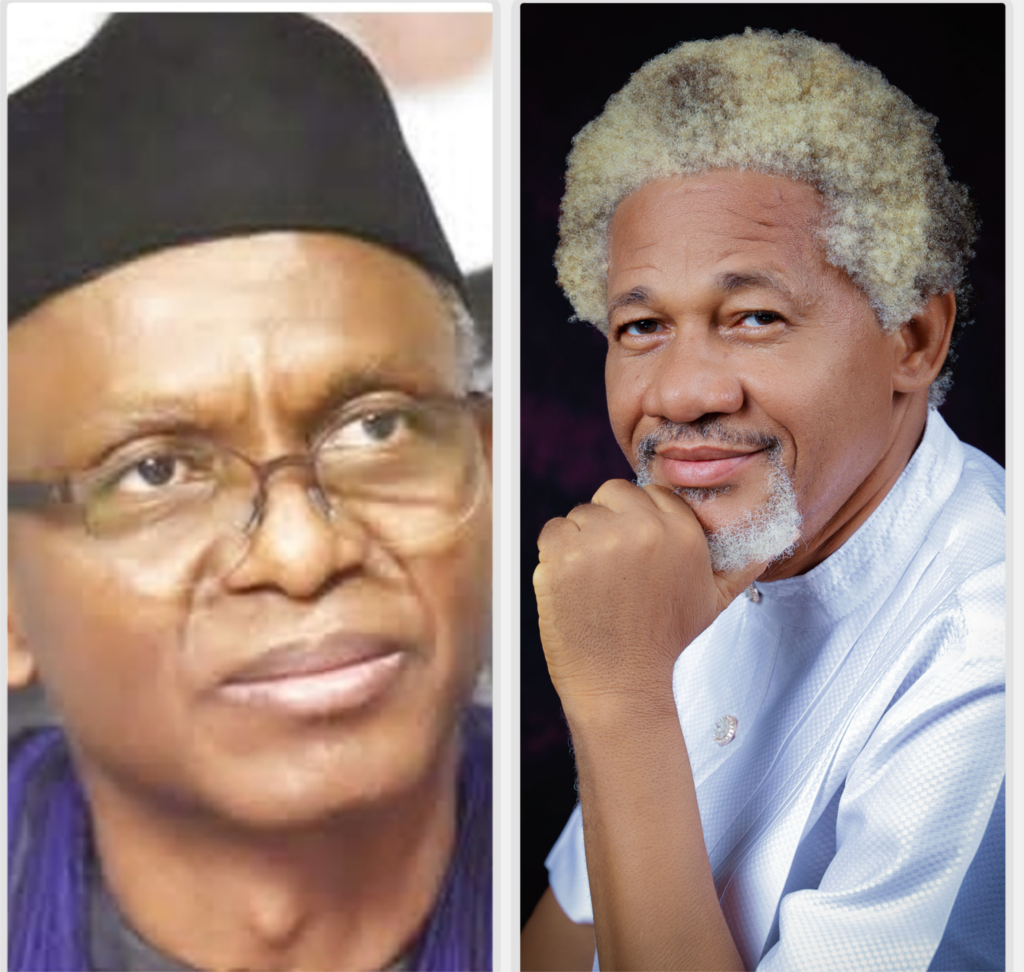
The ongoing prosecution or what many Nigerians rightly see as persecution of Nasir El-Rufai has exposed the ruthless, cannibalistic nature of Nigerian politics. What is unfolding before the nation is not merely a legal exercise but a vicious dog-eat-dog affair among political actors who once dined at the same table of power.
Nigerian politics has never pretended to be guided by ideology or principle. It is a theatre of convenience, where loyalty lasts only as long as it serves personal ambition. Today’s trusted ally quickly becomes tomorrow’s expendable scapegoat once political equations change. The current ordeal of El-Rufai is a textbook example of this dangerous and immoral political culture.
It is the height of irony that a man widely acknowledged to have been instrumental in facilitating the political rise of the present administration now finds himself under intense political and legal fire. Public memory is not short. Nigerians recall the open displays of solidarity, strategic alignment and enthusiastic endorsements that once defined this political relationship. Those who stood shoulder-to-shoulder yesterday are now at daggers drawn today.
This is the tragedy of opportunistic politics: those who help construct the throne are often the first to be pushed off its steps. Power in Nigeria consumes its own architects. Once usefulness expires, friendship is discarded and state institutions are weaponised in pursuit of political dominance and control.
What we are witnessing raises serious concerns about the credibility of governance and the integrity of our democratic institutions. When prosecutions appear selective and politically motivated, the line between justice and vendetta becomes dangerously blurred. The rule of law then risks being reduced to a mere tool for settling elite scores rather than a sacred instrument for protecting society and enforcing accountability.
Nigerians are not deceived. They see a political class locked in internal warfare while the nation grapples with economic hardship, insecurity and institutional decay. Instead of governance driven by public interest, we are confronted with a spectacle of power struggles, betrayals and calculated political survival.
This episode must serve as a warning to all political actors: in a system where power is pursued without principle and alliances are built solely on ambition, no one is safe. Today’s kingmaker can swiftly become tomorrow’s target. Those who believe proximity to power guarantees protection must learn from the unfolding reality that political loyalty in Nigeria is temporary, fragile and often illusory.
Nigeria deserves a political culture anchored on justice, consistency and genuine service to the people not one defined by vendetta, betrayal and internal cannibalism. Until that transformation occurs, the cycle will continue: allies will keep turning into adversaries, and the system will keep devouring its own.